

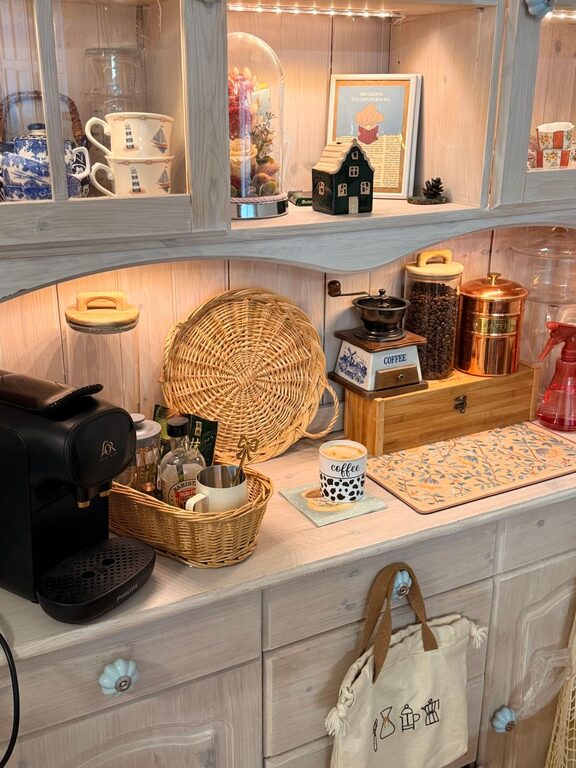
A coffee station can turn a small corner of your kitchen into a welcoming spot for your morning routine. Whether you enjoy a quick instant coffee or like experimenting with different brewing methods, a dedicated space keeps everything together and makes preparation easier.
The best coffee station does not need to be large or expensive. With a little planning, you can create a setup that suits your space, brewing style and daily habits.
Choose the right location
Start by choosing a convenient location. A kitchen bench is the most common option, but you could also use a small sideboard, trolley, shelf or cabinet.
Look for a spot that is:
– Close to a power point if you use an electric coffee machine or grinder
– Near water, so filling the kettle or machine is easy
– Away from busy preparation areas
– Large enough to hold your essential equipment
– Easy to clean
If your kitchen bench is already crowded, consider using a narrow trolley or a dedicated shelf. A movable trolley is especially useful in smaller homes because it can be repositioned when needed.
Avoid placing coffee equipment directly beside the sink if splashes are likely to reach electrical appliances. Also check that there is enough ventilation around coffee machines and kettles.
Decide what your coffee station needs
Before buying anything new, list the items you already use. This helps prevent clutter and ensures your coffee station reflects your routine.
Essential items may include:
– Coffee machine, plunger, pour-over brewer or instant coffee
– Kettle
– Coffee beans or ground coffee
– Mugs
– Teaspoons or coffee scoops
– Sugar or sweetener
– Milk or milk alternatives
– A small container for used coffee grounds
– Cloths for wiping spills
You do not need every type of brewing equipment. Choose one or two methods that you genuinely enjoy. A simple setup is often easier to maintain than a collection of unused gadgets.
If you use coffee beans, a grinder can improve freshness and give you more control over the grind. However, pre-ground coffee is a practical choice if you want to keep your routine quick and simple.
Plan the layout
A well-planned layout makes your coffee station easier to use. Place the items you reach for most often at the front, while less frequently used items can go on a shelf or in a cupboard.
A useful arrangement is:
- Brewing equipment at the centre
- Coffee stored beside or behind it
- Mugs placed on the opposite side or on a nearby shelf
- Spoons and small accessories in a container
- Sugar, syrups or other additions grouped together
Think about the order you follow when making coffee. Place each item in roughly the same sequence. For example, the kettle could sit closest to the power point, with coffee, mugs and extras within easy reach.
Leave some open bench space around the main appliance. This gives you room to prepare your drink and makes cleaning easier.
Add practical storage
Good storage keeps your coffee station tidy and protects your supplies. Airtight containers are useful for coffee beans, ground coffee, sugar and other dry ingredients. Choose containers with clear labels so you can quickly identify what is inside.
For a small setup, try:
– A tray to group coffee supplies
– Small baskets for tea bags and sachets
– Wall hooks for mugs
– A tiered shelf for jars and containers
– A drawer organiser for spoons and accessories
– A narrow container for coffee scoops
A tray is one of the simplest ways to create a defined coffee station. It keeps loose items together and can be moved easily when you need extra bench space.
If you store coffee in containers, keep them away from direct sunlight, heat and moisture. A cool, dry cupboard is usually better than an open shelf beside the oven.
Select mugs that suit your routine
Mugs are both useful and decorative. Choose shapes and sizes that match the drinks you make most often. Small cups may suit short coffees, while larger mugs are handy for long blacks, plunger coffee or milky drinks.
Keep your everyday mugs within easy reach. If you have special mugs for guests or seasonal use, store them elsewhere to avoid overcrowding the station.
You can display a few favourite mugs on hooks or an open shelf. This adds personality without requiring much space. Make sure the hooks or shelf are securely installed and strong enough for the mugs.
Create a simple style
Your coffee station should feel like part of the room rather than an unrelated collection of appliances. Use colours and materials that complement your kitchen.
For a clean, modern look, choose matching containers and a simple tray. For a warmer style, add timber, woven baskets or ceramic pieces. If you prefer a colourful space, use mugs, artwork or small accessories to bring in brighter tones.
Try to limit visible items to those you use regularly. Too many decorations can make the area look crowded and create more surfaces to dust.
A small plant, framed print or reusable sign can add a personal touch. Keep decorations away from heat, steam and water.
Keep cleaning supplies close
Coffee grounds, milk and sugar can quickly create sticky spills. Keeping a small cloth or washable towel nearby makes it easier to clean up straight away.
Build these simple habits into your routine:
– Wipe the bench after making coffee
– Empty used grounds promptly
– Rinse the plunger or brewing equipment after use
– Wash mugs regularly
– Clean the kettle and coffee machine according to the manufacturer’s instructions
– Check containers for crumbs, moisture or spills
Regular cleaning helps your station look inviting and keeps equipment working well. It is easier to clean small spills immediately than to deal with a build-up later.
Make the station work for everyone
If several people use the coffee station, consider their different preferences. Store a selection of coffee types, mugs or sweeteners in clearly labelled containers. This keeps the area organised and helps everyone prepare their drink without searching through cupboards.
For households with children, place hot appliances, cords and small items safely out of reach. Keep the station away from edges where mugs or containers could be knocked over.
If guests often visit, add a few spare mugs and simple options such as tea, hot chocolate or decaffeinated coffee. A small menu card or labelled jars can make the area feel welcoming without adding much work.
Work with a small space
Even a compact kitchen can accommodate a coffee station. Use vertical storage to make the most of limited bench space. A wall-mounted shelf, mug hooks or a slim trolley can provide useful storage without taking up much room.
Choose equipment with a smaller footprint if possible. A compact kettle, hand grinder or single-cup brewer may be more practical than a large machine.
Another option is a cupboard coffee station. Store the equipment behind closed doors and open the doors when preparing a drink. Make sure appliances have enough room and are used safely, particularly if heat or steam is involved.
Review your setup over time
Your coffee station does not need to be perfect from the beginning. Use it for a few weeks and notice what works well and what causes frustration.
You may discover that:
– Your mugs are too far from the brewing equipment
– You need more storage for coffee supplies
– Some accessories are rarely used
– The station needs better lighting
– A tray would make cleaning and moving items easier
Make small adjustments as your routine changes. The most successful coffee station is one that saves time, reduces clutter and makes your daily coffee break more enjoyable.
With the right location, practical storage and a layout based on your habits, you can create a coffee station that is both useful and inviting. Start with the essentials, keep the area easy to clean and add personal touches that make it feel like your own.