

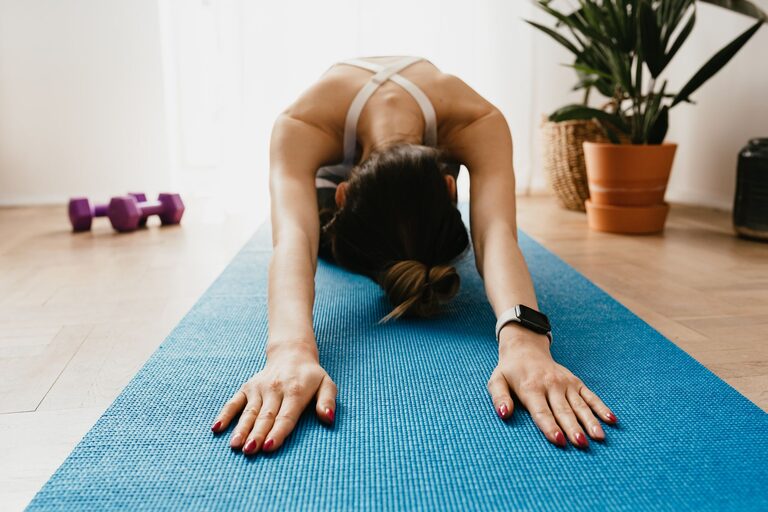
Stretching is a simple way to add more movement to your day. You do not need special equipment, a large room or a long workout. With a few minutes and a little space, you can gently move your major muscle groups and build a regular habit at home.
For beginners, the main aim is not to become extremely flexible. Instead, focus on moving comfortably, breathing steadily and learning how your body feels. A consistent routine can help you feel less stiff and more prepared for everyday activities.
What is stretching?
Stretching involves lengthening muscles and moving joints through a comfortable range. It can be done before activity, after activity or as a separate session.
There are two common types:
– Dynamic stretching: Gentle, controlled movements that take your body through a range of motion. These are often useful before exercise.
– Static stretching: Holding a comfortable position for a set period. These stretches are often included after exercise or during a relaxed flexibility session.
Both types can be useful. The best choice depends on what you are doing and how your body feels.
Getting started safely
Before you begin, choose a clear, comfortable space where you can move without bumping into furniture. Wear clothing that allows easy movement, and have a chair, wall or folded towel nearby if you need extra support.
Keep these basic guidelines in mind:
– Move slowly and avoid bouncing.
– Stretch to a gentle pulling sensation, not pain.
– Breathe normally rather than holding your breath.
– Keep your movements controlled.
– Begin with a short session and build gradually.
– Stop if you feel sharp pain, numbness, dizziness or unusual discomfort.
If you have an injury, ongoing pain or a condition that affects movement, consider asking a qualified health professional for personalised guidance before starting a new routine.
Warm up before static stretching
It is usually more comfortable to stretch after a few minutes of light movement. A warm-up raises your body temperature and helps you ease into the session.
Try five minutes of simple activities such as:
– Walking around your home
– Marching gently on the spot
– Rolling your shoulders
– Moving your arms in small circles
– Performing easy heel raises
– Taking a relaxed walk outdoors
The warm-up should feel easy. You are simply preparing your body, not trying to tire yourself out.
Beginner-friendly stretches
The following stretches cover several major areas. Move into each position gradually and stay within a comfortable range.
Neck and shoulder stretch
Sit or stand tall with your shoulders relaxed. Slowly tilt your right ear towards your right shoulder without lifting the shoulder. Hold briefly, then return to the centre and repeat on the other side.
Next, gently turn your head to look over one shoulder, then the other. Keep the movement small and smooth. Avoid pulling on your head or forcing your neck into position.
For your shoulders, draw them up towards your ears, then relax them down. Repeat several times. You can also make slow backwards shoulder circles.
Chest stretch
Stand near a doorway and place your forearms lightly against the door frame, with your elbows around shoulder height. Step forward a small amount until you feel a gentle stretch across your chest.
Keep your ribs relaxed and avoid pushing too far. If this position is uncomfortable, simply clasp your hands behind your back and draw your shoulders gently down while standing tall.
Upper-back stretch
Sit or stand and extend both arms in front of you. Clasp your hands, or place your palms together, then gently reach forwards as though you are widening the space between your shoulder blades.
Allow your upper back to round slightly, but keep the movement comfortable. Breathe slowly and return to a neutral position when finished.
Standing side stretch
Stand with your feet about hip-width apart. Raise your right arm overhead and lean gently to the left. Keep both feet grounded and avoid twisting your body forwards or backwards.
Return to the centre and repeat on the other side. This stretch should feel comfortable along the side of your body.
Calf stretch
Place your hands on a wall. Step your right foot back and keep the heel on the floor. Bend your front knee slightly while keeping the back leg comfortable and steady.
Lean towards the wall until you feel a gentle stretch in the calf of your back leg. Hold, then switch sides. Keep your back heel pointing towards the floor without forcing it down.
Front-of-thigh stretch
Stand beside a wall or chair for balance. Bend your right knee and bring your heel towards your bottom. Hold the ankle or trouser leg if you can do so comfortably.
Keep your knees close together and your torso upright. Do not pull the foot forcefully. Release slowly and repeat on the other side.
If reaching your foot is difficult, you can leave this stretch out or perform it lying on your side with plenty of space.
Back-of-thigh stretch
Sit near the front of a sturdy chair with one leg extended, heel resting on the floor and toes pointing upwards. Keep your back long and lean forwards slightly from your hips.
You should feel a gentle stretch behind the thigh. Avoid rounding deeply or trying to touch your toes. Return to an upright position and change sides.
A simple 10-minute routine
A short routine is easier to maintain than an ambitious one. Try the following sequence:
- March gently on the spot for two minutes.
- Perform shoulder rolls and neck movements for one minute.
- Complete the chest and upper-back stretches.
- Add the standing side stretch on both sides.
- Perform the calf stretch on both sides.
- Finish with the front- and back-of-thigh stretches.
- Take a few relaxed breaths before standing up or moving on.
For static stretches, begin by holding each position for around 15 to 20 seconds. As you become more comfortable, you can gradually increase the time, provided the stretch remains gentle.
Common beginner mistakes
Stretching should feel calm and controlled. Avoid these common mistakes:
– Bouncing: This can make it harder to control the movement.
– Pushing through pain: More intensity does not always mean better results.
– Holding your breath: Steady breathing helps you stay relaxed.
– Ignoring balance: Use a wall or chair rather than wobbling.
– Doing too much too soon: Short, regular sessions are often more manageable.
– Comparing yourself with others: Flexibility varies from person to person.
How to build a lasting habit
Choose a time that fits naturally into your day. You might stretch after waking up, during a work break, after a walk or before relaxing in the evening.
Keep your routine visible by placing a towel or exercise mat in an easy-to-reach spot. You can also set a gentle reminder on your phone. Tracking your sessions may help you notice patterns, but it is not necessary to stretch every day to make progress.
Pay attention to how you feel rather than trying to reach a particular position. Over time, regular practice may make everyday movements feel smoother and more comfortable.
Final tips
Stretching at home can be simple, affordable and adaptable. Start with a warm-up, use slow movements and focus on comfort. A few minutes of steady practice can be a useful addition to an active lifestyle.
The most important part is consistency. Choose a small routine you enjoy, make it part of your week and give your body time to adjust.